

Every standby generator installation in the Greater Houston area requires permits. There is no version of this where you skip that step, and there is a good reason for it: a generator ties into both your gas supply and your electrical service, and getting either one wrong creates a carbon monoxide or backfeed hazard.
The good news is that permitting is your installer’s job, not yours. What you should understand is what permits are involved, roughly what they cost, how long they add to the timeline, and what happens if someone talks you into skipping them.
Which permits you need
For a typical residential standby generator, expect two:
- Electrical permit. Required everywhere in our service area. Covers the transfer switch, the connection to your service panel, conduit, grounding, and bonding. Must be pulled by a licensed electrical contractor registered with that jurisdiction.
- Gas or plumbing permit. Required in most jurisdictions when a new gas line is run to the unit. In the City of Houston this is handled as a separate single-trade plumbing permit.
Depending on where you live you may also encounter a mechanical permit, a building or site permit if a concrete pad counts as a structure locally, and separate HOA architectural approval, which is not a government permit but can absolutely stop your project.
What it looks like by jurisdiction
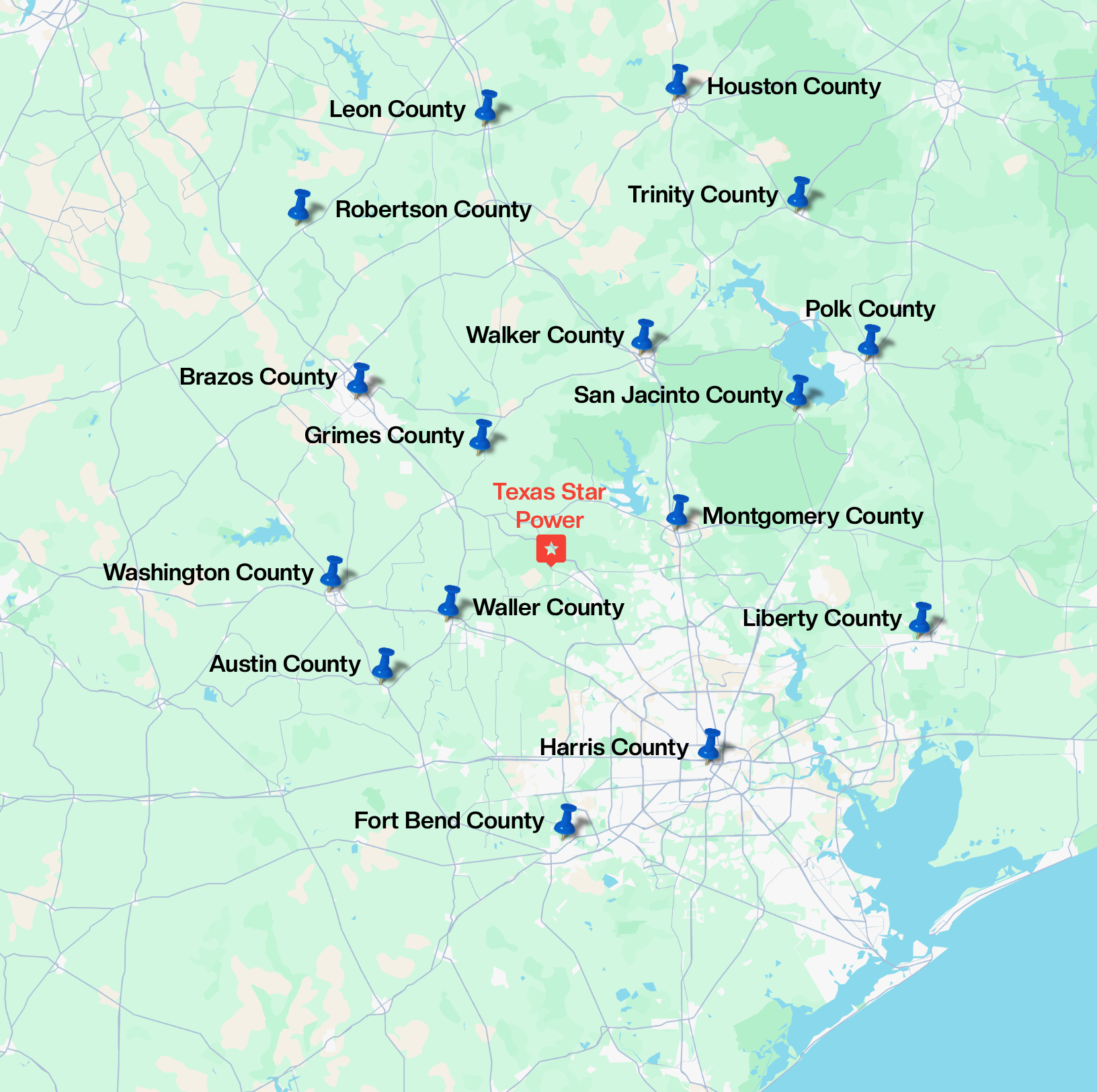
Requirements vary meaningfully across the area we serve. This is a general orientation, not a substitute for checking your specific address.
| Jurisdiction | Permits typically required | Notes |
|---|---|---|
| City of Houston | Electrical + plumbing (single trade) | Applied for through the iPermits portal by a registered contractor. Inspections follow Houston Construction Codes, the manufacturer manual, and NFPA — whichever is strictest. |
| Unincorporated Harris County | Electrical, gas | Generally lighter review than inside city limits, but floodplain rules can dictate how high the unit must sit. |
| Montgomery County | Electrical, gas | No countywide residential building code in much of the county, but incorporated cities within it have their own rules. Well and septic locations affect placement. |
| Conroe, Katy, Tomball, Magnolia | Electrical, gas, sometimes site | Each city runs its own permitting office with its own fees and timelines. |
| The Woodlands | Electrical, gas + covenant review | Residential Design Review is a real step here. Screening and placement standards are enforced. |
| Master-planned / HOA communities | Above plus HOA approval | Often the longest lead time in the whole project. Start it early. |
What permits cost (estimated)
Across most Houston-area jurisdictions, permit and inspection fees for a residential standby generator are estimated at roughly $400 to $1,400*. *Estimate only. Fees scale with jurisdiction, the number of trades involved, and sometimes the size of the unit, and jurisdictions change their fee schedules — confirm current amounts for your address.
That figure should already be inside your installed quote. If a bid does not mention permits, ask directly whether they are included or excluded before you sign. Our Houston generator cost guide breaks down where permits fall relative to the rest of the job.
How long permitting takes
This is the part that surprises people. The physical installation is one to three days. The permitting and inspection cycle is what stretches the calendar:
- Permit application and issuance: a few days to about three weeks, depending on jurisdiction and how busy they are.
- HOA or design review: two to six weeks in communities that require it, sometimes tied to a monthly meeting schedule.
- Inspection scheduling after install: several days to two weeks.
- Gas meter upgrade, if needed: two to six weeks on the utility’s timeline, which nobody can accelerate.
Realistically, plan on three to eight weeks from signed contract to a commissioned generator. That window widens considerably once a hurricane is named and everyone in the region calls at once. Getting your paperwork moving in spring is the single easiest way to be ready by peak season.
What inspectors actually check
Inspections tend to focus on a consistent short list:
- Clearances. Minimum distances from windows, doors, soffit vents, and property lines — typically five feet from openings, though local rules vary. This prevents exhaust from getting pulled back into the house.
- Transfer switch installation. Correct type and rating, properly labeled, with no possibility of backfeeding the utility. Backfeed is what kills line workers.
- Grounding and bonding. Done to code, verified.
- Gas line sizing and pressure test. The line has to be sized to deliver adequate volume, and it gets pressure tested.
- Mounting and elevation. Secured to the pad, and in flood-prone areas elevated appropriately.
- Manufacturer requirements. If the install manual is stricter than local code, the manual governs.
What happens if you skip permits
Some homeowners get offered a cheaper cash price to skip the paperwork. It is a bad trade:
- Insurance exposure. If an unpermitted installation contributes to a fire or CO incident, your carrier may deny the claim.
- Problems at resale. Unpermitted work turns up in inspection, and buyers ask for it to be corrected or discounted.
- Warranty risk. Manufacturers can decline warranty coverage on improperly installed units.
- Retroactive enforcement. Jurisdictions can require you to open up finished work for inspection, or remove it.
- No independent verification. The inspection is the one moment a neutral third party confirms the work is safe. That is worth having.
What we handle for you
On our installations we pull the permits, coordinate the inspections, and manage the utility conversation if your gas meter needs upsizing. You do not visit a permitting office. Where an HOA is involved, we provide the documentation and specifications the architectural committee asks for. See our installation process for how this sequences.
Frequently asked questions
Do I need a permit for a whole-house generator in Houston?
Yes. The City of Houston requires an electrical permit, pulled by a registered electrical contractor, plus a plumbing permit for the gas connection. Inspections follow Houston Construction Codes, NFPA standards, and the manufacturer manual, whichever is most restrictive.
Do I need a permit in unincorporated Montgomery County?
Electrical and gas permitting still applies, though much of unincorporated Montgomery County has no countywide residential building code. Incorporated cities within the county set their own requirements. Your installer should confirm based on your exact address.
Who pulls the permit — me or the installer?
Your installer, and in most jurisdictions only a licensed, registered contractor can. If someone asks you to pull an owner permit for work they are performing, treat that as a warning sign.
How much are generator permits in the Houston area?
Estimated at $400 to $1,400 total across the required trades, varying by jurisdiction. Treat that as a planning range rather than a firm figure, and expect it to be included in your installed price.
Does a portable generator need a permit?
A portable unit you roll out and plug into extension cords does not. But if you install a manual transfer switch or an inlet box so it can feed your panel, that electrical work does require a permit — and it should, since that is exactly where backfeed risk lives.
Will my HOA let me install a generator?
Almost always yes, but frequently with conditions on placement, screening, and sometimes noise. Texas law limits how far an HOA can go in prohibiting standby generators, though reasonable aesthetic and location requirements are generally enforceable. Submit for approval early — it is often the longest step.
Ready to get started? Request a free in-home assessment and we will confirm exactly what your address requires, handle the permitting, and give you a realistic timeline. If you are still deciding on equipment, our sizing guide is a good next stop.